
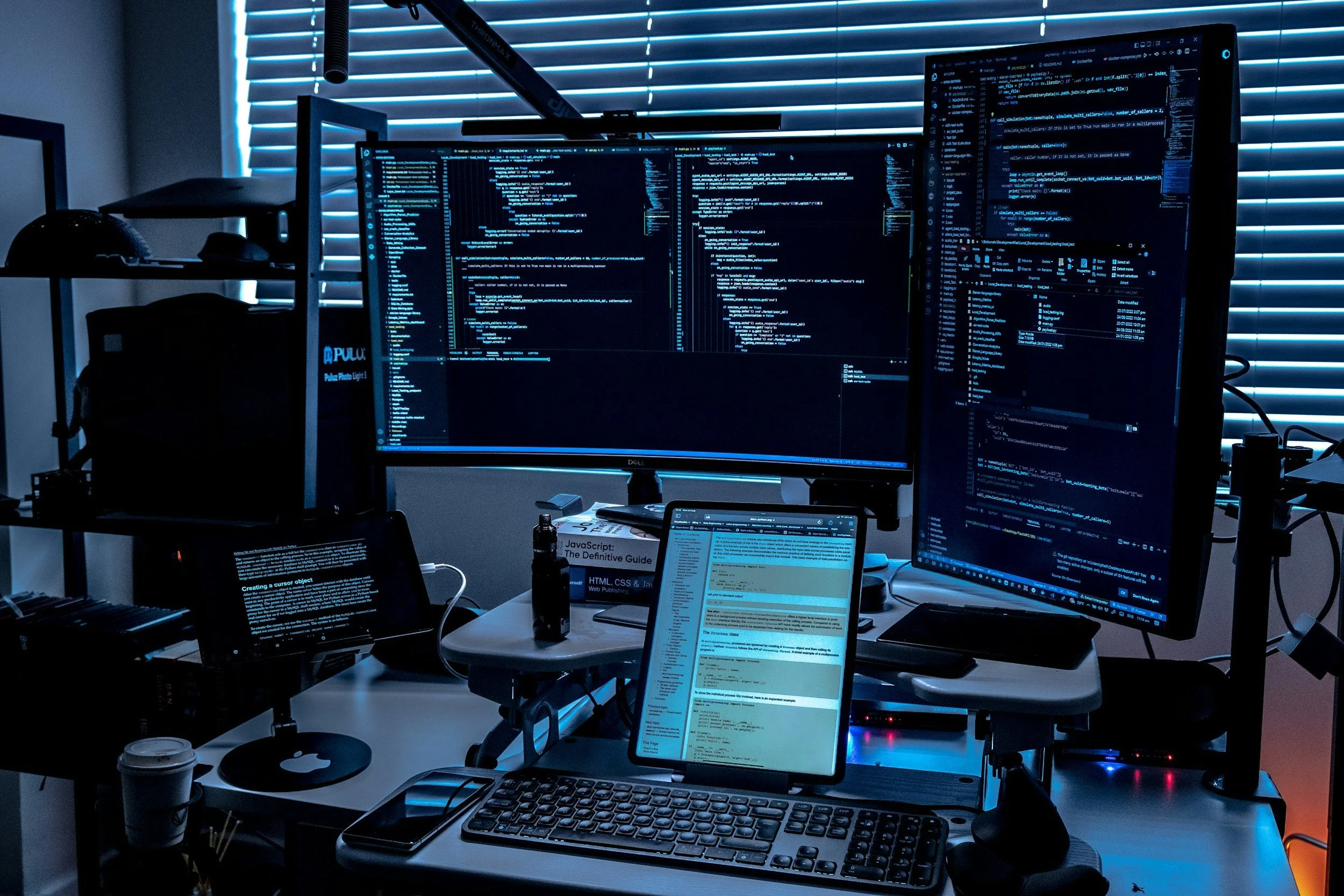

I engineer production-ready LLM systems that operate as structured, reliable components within larger software architectures. My work includes multi-agent workflows where specialized agents handle task decomposition, retrieval, tool invocation, validation, and response synthesis under controlled execution paths. I build retrieval-augmented generation (RAG) systems using embedding generation pipelines, cosine similarity search, and top-N retrieval strategies over vector databases (e.g., pgvector) to ground outputs in client-specific data. Where domain adaptation is required, I implement parameter-efficient fine-tuning approaches such as LoRA and QLoRA, and manage model versions through controlled deployment patterns and registry-backed workflows. I work with managed model platforms such as AWS Bedrock to integrate foundation models into enterprise environments with governance, access control, and auditing requirements. Systems are deployed within scalable microservice architectures with defined latency thresholds, structured observability, and release criteria suitable for production use. Deterministic guardrails, tool-based computation, and LLM tracing frameworks are incorporated to ensure correctness, traceability, and measurable performance under real-world constraints.
Representative Work
- Architected and productionized multi-agent LLM workflows for analytics generation and validation, combining structured tool calls, deterministic checks, and retrieval grounding to eliminate hallucinations in accuracy-critical outputs.
- Built RAG systems over enterprise transcript and engagement datasets using embedding pipelines, cosine similarity search, and vector database indexing to enable semantic search and contextual Q&A.
- Integrated LLM-driven services into containerized backend applications using LangChain-based orchestration patterns, AWS Bedrock-managed models, and Langfuse observability for tracing, evaluation, and performance monitoring.
Core Technologies
Multi-agent orchestration; LangChain-based workflow design; retrieval-augmented generation (RAG); embedding generation pipelines; cosine similarity and top-N retrieval methods; vector databases (pgvector); parameter-efficient fine-tuning (LoRA, QLoRA); model versioning and registry-backed deployment; AWS Bedrock-managed foundation models; prompt engineering and structured prompting; tool-based LLM execution; deterministic validation layers; API-based model serving; latency-aware deployment patterns; LLM observability and tracing (Langfuse); scalable microservice integration; evaluation frameworks for generative systems.
I architect language intelligence systems that convert unstructured text into structured, decision-ready signals. My work spans supervised, unsupervised, and deep learning approaches, including sentiment analysis, POS tagging, named entity recognition, topic extraction, hierarchical classification, and embedding-driven similarity. I have implemented transformer-encoded sequence models, including embedding pipelines feeding GRU-based classifiers, for large-scale labeling and recommendation workflows. These models are integrated into real-time and batch inference services with defined evaluation criteria and monitoring standards. Emphasis is placed on reproducibility, interpretability, and measurable business alignment. Systems are structured to handle heterogeneous data inputs while maintaining traceability in production.
Representative Work
- Architected a large-scale hierarchical classification system processing over 100 million e-commerce product pages across thousands of labels.
- Built embedding-based similarity and recommendation systems integrated into live application workflows.
- Developed NLP pipelines transforming transcripts and text-heavy operational datasets into structured features for analytics, root-cause analysis, and downstream predictive modeling.
Core Technologies
Supervised and hierarchical classification; multi-label modeling; topic modeling and clustering; sentiment and intent modeling; NER and POS tagging; transformer-based embeddings; GRU/LSTM sequence models; cosine similarity and semantic retrieval; recommendation systems; real-time and batch inference integration; evaluation metrics (precision, recall, F1, ROC-AUC); drift detection; reproducible training workflows.
I build machine learning features as production software components deployed within scalable microservice architectures. I have led the 0-to-1 development of full ML suites inside enterprise-grade, SOC 2–aligned systems designed for reliability, auditability, and horizontal scalability. Models are treated as versioned, testable artifacts integrated into containerized backend services, with infrastructure defined through infrastructure-as-code and deployed via CI/CD pipelines. I apply software engineering discipline to ML development, incorporating data validation, deterministic safeguards, and explicit failure modes throughout the lifecycle. Systems include structured monitoring, performance evaluation, controlled rollout strategies, and defined retraining or revalidation workflows to maintain correctness post-deployment. My ownership spans ingestion, feature engineering, training, deployment, experimentation, and production incident response.
Representative Work
- Led the design and implementation of an enterprise analytics platform delivering descriptive, diagnostic (root cause analysis), and predictive ML features within a scalable AWS-based microservice architecture.
- Built event-driven ingestion and normalization pipelines enabling real-time hybrid inference across client-specific schemas.
- Owned production ML system behavior end-to-end, including deployment pipelines, monitoring, controlled releases, and rapid remediation of onboarding and schema-related failures.
Core Technologies
Scalable microservice architectures; containerization (Docker); API-based model serving (FastAPI); event-driven ingestion systems; schema normalization across heterogeneous client data; infrastructure-as-code (OpenTofu/Terraform patterns); CI/CD pipelines; automated data validation and testing; experiment tracking; model versioning; batch and real-time inference services; monitoring and observability; drift detection; controlled rollout and re-evaluation strategies.